

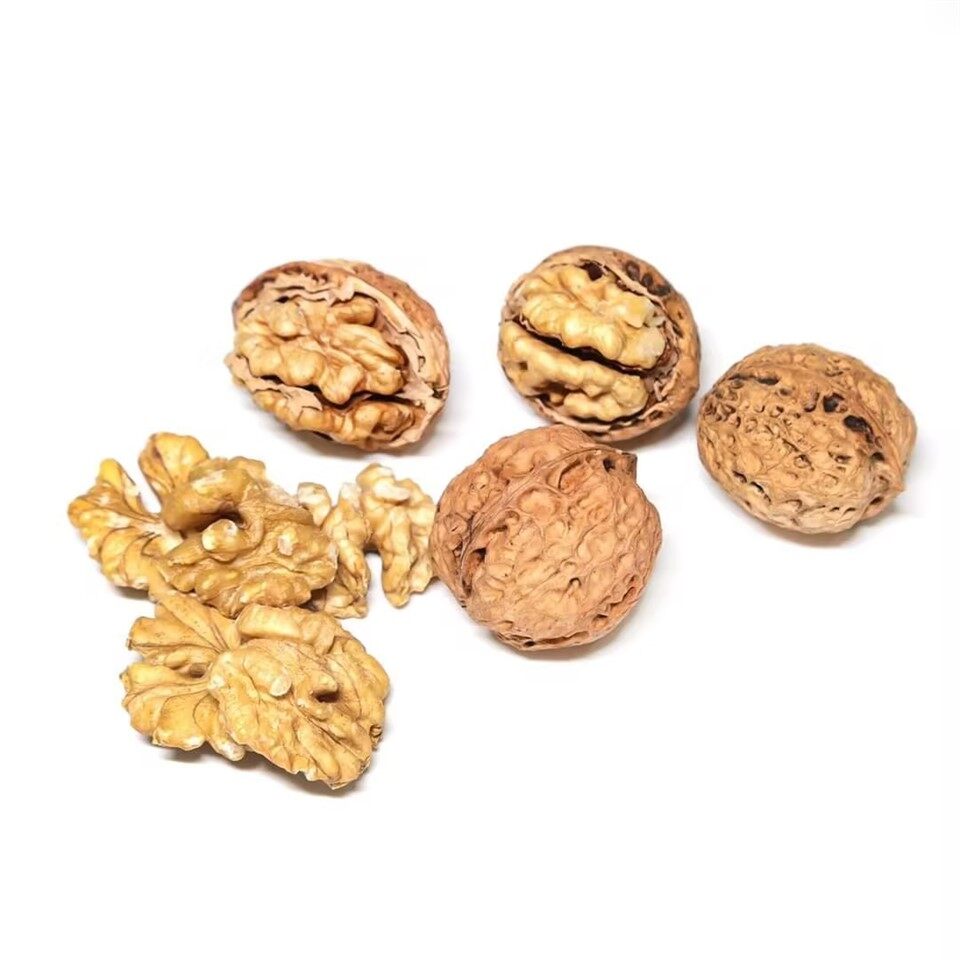
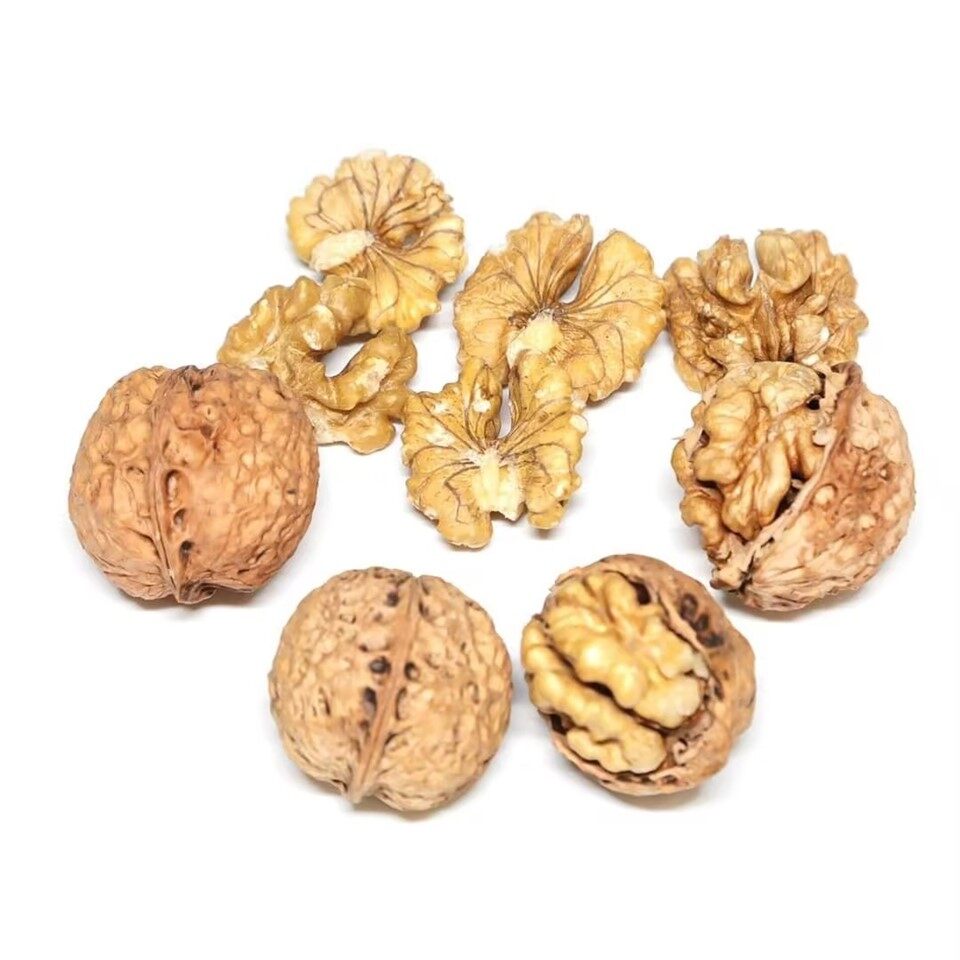
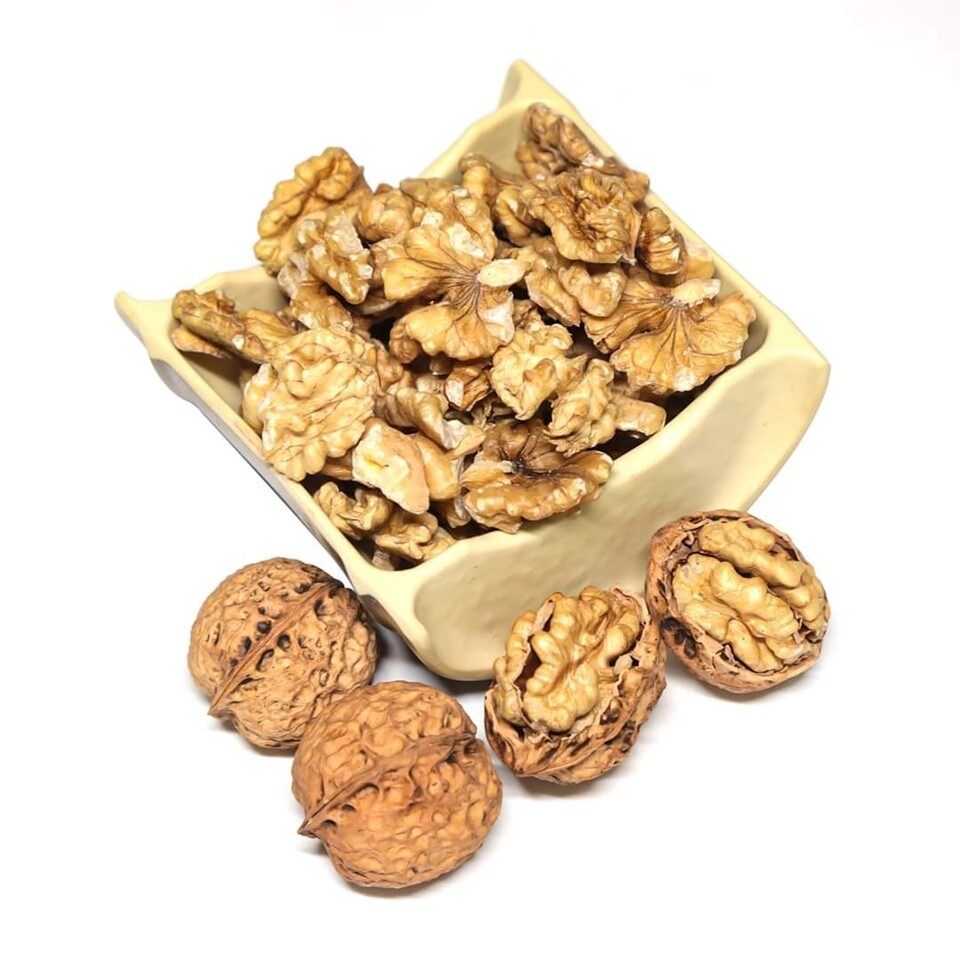
The raw material from Yunnan is characterised by the following characteristics and circumstances:
Variety and origin
A wide range of varieties is available. The Yunnan walnut market is mainly composed of Yangbi walnuts, Dayao Santai walnuts and other varieties. The Yangbi walnut has a thin shell and a full kernel, offering a pure flavour profile. The Dayao Santai walnut has a smoother shell and excellent kernel quality.
Yunnan walnuts have a wide range of origins, with the main production areas including Dali, Chuxiong, Baoshan, Lincang and others. The climate, light and soil conditions in these areas are conducive to the growth and quality of the walnuts, while also supporting high yields.
Quality characteristics
Appearance and taste: The shell of the raw Yunnan walnut is typically dark brown or light black, while the kernel is rice-white or light yellow. The product has a crunchy, delicious taste with no bitterness or astringency and a strong walnut aroma.
Nutritious, these nuts are a rich source of protein, unsaturated fats, vitamin E, B vitamins and minerals such as calcium, phosphorus, iron and more. They support brain health, act as antioxidants and help prevent cardiovascular disease.
Market situation
Supply and price: The typical supply period for raw Yunnan walnuts is from August to March each year. The price of this product varies according to a number of factors, including the specific variety, grade, market demand and other variables.
Distribution channels: The product is mainly distributed through wholesale agricultural markets and e-commerce platforms. Consumers prefer raw Yunnan walnuts sold through e-commerce platforms due to their freshness, naturalness and lack of additives.
Processing and Usage
The processing of raw Yunnan walnuts can be carried out in a number of ways, including: Raw Yunnan walnuts can be processed into a variety of products, including walnut kernels, walnut oil, walnut powder and more. During processing, we prioritise the retention of nutrients and the natural flavour of walnuts. This is achieved through the use of advanced technology, including low-temperature baking and physical pressing.
The product has a wide range of applications, including direct consumption, use in the production of cakes, breads, chocolates and other foodstuffs, and as a cooking ingredient for dishes, soups and similar items. Furthermore, raw walnuts possess certain medicinal properties, making them effective in treating conditions such as neurasthenia and insomnia.
Please find below details of the Yunnan walnut frying and walnut oil production process.
The traditional pressing method is as follows:
The raw materials must be treated in the following way:
The Yunnan walnuts must be selected and prepared in such a way that they are free from deterioration and odour.
The walnut kernel is crushed into smaller particles or fragments and steamed before being stir-fried. This process ensures uniform heating of the kernel, denaturing of the protein and destruction of the cell structure, which facilitates the extraction of oil and grease.
The next step is to press the mixture. The walnut kernels should then be pressed using either a screw or hydraulic press, which will exert pressure on the kernels after steaming and stir-frying, and squeeze out the oil.
The walnut oil from the first pressing contains certain impurities, such as residue and water, which must be removed through filtering equipment to produce a clearer product.
The water substitution method involves grinding walnut kernels with water to form a pulp. The density difference between oil and water and the emulsification of protein facilitate the separation of oil from the pulp.
The oil is then purified through centrifugation and other methods.
The solvent extraction method involves selecting suitable organic solvents, such as hexane, to dissolve the oil in walnut kernels. The solvent is then removed through distillation and other methods to obtain walnut oil. However, this method may entail the risk of solvent residue and requires more sophisticated equipment and processes.


